



Understanding Outsourcing in the Philippines
Outsourcing, the practice of contracting a third party to perform services traditionally handled in-house, has gained significant traction over the last two decades. The Philippines has emerged as a premier destination for outsourcing, particularly in sectors such as business process outsourcing (BPO), information technology (IT), and customer service. This growth can be attributed to a multitude of factors that have positioned the country as a viable hub for global companies seeking efficient and cost-effective solutions.
One of the key drivers behind the Philippines’ rise in the outsourcing industry is its large, skilled workforce. With a high literacy rate and strong English proficiency, Filipinos are well-equipped to meet the demands of various sectors, making them attractive candidates for international companies. The cultural affinity towards Western practices further enhances their capability to engage proficiently with international clients.
The government has also played a critical role in nurturing the outsourcing sector. Recognizing its economic potential, authorities have implemented policies that encourage foreign investment and provide incentives for outsourcing companies. Additionally, the establishment of special economic zones has fostered a business-friendly environment, contributing significantly to the growth of outsourcing in the Philippines. These zones are equipped with advanced infrastructure, which further facilitates the ease of doing business.
In terms of the sectors most commonly outsourced to the Philippines, the BPO industry stands out prominently, encompassing services such as customer support, telemarketing, and technical support. However, the landscape of outsourcing is evolving, with increasing demand for IT-related services such as software development, data analytics, and digital marketing.
Overall, the Philippines continues to be a vital player in the global outsourcing landscape, driven by its skilled human resources, supportive government policies, and a diverse range of services offered. Within this context, understanding the evolution of the outsourcing industry is essential as stakeholders navigate the ongoing dynamics of this sector.
Historical Overview of Outsourcing in the Philippines
The outsourcing industry in the Philippines began to gain significant traction in the early 2000s, positioning the country as a premier destination for Business Process Outsourcing (BPO). Early milestones in this sector included the establishment of the first call centers, which catered mainly to American companies seeking cost-effective solutions for customer service and telemarketing. The Philippines offered a unique set of advantages, such as a large pool of English-speaking graduates, competitive labor costs, and a favorable time zone.
As the industry evolved, key developments in technology played a crucial role in enhancing operational efficiencies in outsourcing. The introduction of high-speed internet and advancements in telecommunications enabled seamless communication, which became a critical factor for international companies looking to outsource their operations. This technological progress laid the groundwork for the expansion of services beyond traditional call center operations, encompassing IT support, human resources, and creative services.
By the late 2000s, the Philippines was recognized globally for its capabilities in the outsourcing sector. The government also played an instrumental role in fostering this growth by implementing favorable policies, investing in training programs, and establishing economic zones that attracted foreign investors. As a result, the Philippines saw the emergence of numerous global outsourcing firms and a steady influx of jobs, contributing significantly to the country’s economy.
In the following years, the outsourcing industry faced challenges, including competition from emerging markets and changing client expectations. However, continuous innovation and adaptation helped the Philippines maintain its status as a leading outsourcing hub. To this day, the country’s adaptability and commitment to workforce development remain vital to its ongoing success in the outsourcing landscape.
Current State of the Outsourcing Industry
The outsourcing industry in the Philippines remains a vital component of the global economy, employing over 1.3 million Filipinos and contributing approximately $29 billion to the national GDP as of 2022. This sector has evolved significantly over the past two decades, with the Philippines establishing itself as a premier destination for Business Process Outsourcing (BPO) services. The country is particularly renowned for its customer service, technical support, and information technology outsourcing services, which cater to a diverse range of sectors including healthcare, finance, and e-commerce.
One of the most notable aspects of the current outsourcing landscape is the diversification of services offered. While traditional voice outsourcing services continue to thrive, there has been a marked increase in non-voice services, such as IT services, digital marketing, and content creation. This shift is indicative of a broader trend towards value-added services that demand specialized skills, positioning the Philippines as a multifaceted hub for outsourcing.
The COVID-19 pandemic significantly impacted the outsourcing industry globally, and the Philippines was no exception. Initially, the lockdowns led to disruptions and a temporary decline in operations. However, the industry quickly adapted to remote work setups, with many companies leveraging technology to maintain productivity. This adaptation not only preserved jobs but also showcased the resilience of the industry. Post-pandemic, there is an observed upsurge in demand for outsourcing services, as businesses worldwide seek to optimize costs and enhance operational efficiencies.
Overall, while challenges remain, including competition from other outsourcing destinations and the rapid pace of technological advancement, the Philippines continues to thrive as a key player in the global outsourcing arena. The combination of skilled human resources, a favorable business environment, and an ability to adapt to change positions the industry on a path of potential growth and evolution in the coming years.
Challenges Facing the Outsourcing Sector
The outsourcing industry in the Philippines is grappling with numerous challenges that threaten its long-standing position as a global leader in this sector. One of the primary challenges is increased competition from other emerging outsourcing countries. Nations like Vietnam, India, and various Eastern European countries have begun to enhance their own outsourcing capabilities, offering similar services at competitive rates. This heightened competition not only pressures Philippine companies to innovate but also necessitates the implementation of cost-cutting measures to remain viable.
Technological advancements pose significant challenges as well. The rapid evolution of technology, particularly artificial intelligence and automation tools, requires outsourcing firms to adapt swiftly. Companies that fail to integrate these emerging technologies risk losing relevance in a market that now values efficiency and innovation. Furthermore, these technological changes can lead to displacement of jobs, as certain functions may become automated, resulting in concerns regarding job security within the workforce.
Another pressing issue is the skills gap prevalent among the local talent pool. While the Philippines is known for its skilled workforce, there exists a disparity between the skills possessed by workers and the demands of the outsourcing industry. Employers are increasingly seeking individuals who possess advanced technical skills and a strong understanding of digital tools. Addressing this skills mismatch is essential for sustaining growth in the industry.
Finally, changing client expectations are redefining the outsourcing landscape. Clients now demand more value-added services, including strategic support and innovation in addition to basic outsourcing functions. This shift in client expectations necessitates a reevaluation of service offerings and flexibility in business models to accommodate evolving needs. As the outsourcing sector navigates these multifaceted challenges, it will need to adopt innovative strategies and enhance workforce capabilities to maintain its competitive edge.
The Role of Technology in Outsourcing Evolution
The outsourcing industry has witnessed a significant transformation with the advent of advanced technology. In the Philippines, where outsourcing has become a crucial component of the economy, innovations such as artificial intelligence (AI), automation, and remote working tools are redefining service delivery models. AI, for instance, is enhancing efficiency in various sectors, providing businesses with the ability to analyze large datasets, predict customer behavior, and deliver personalized services at scale. This shift not only improves productivity but also enables companies to maintain competitiveness in an increasingly dynamic market.
Automation is another pivotal force driving change within the outsourcing landscape. By streamlining repetitive tasks, automation allows Filipino workers to focus on more complex, value-added duties. This is particularly evident in areas such as customer service and data entry, where software solutions can handle routine inquiries, thereby freeing human resources for high-level strategic functions. However, while automation presents distinct advantages, it also poses challenges, particularly with regard to job displacement and the necessity for reskilling the workforce.
Furthermore, the rise of remote working tools has revolutionized collaboration between outsourcing providers and their clients. Platforms that facilitate communication, project management, and file sharing have made it easier for teams to work together across geographical boundaries. This accessibility has allowed Philippine outsourcing firms to attract international clients seeking flexibility and cost-efficiency without compromising quality. Nevertheless, reliance on technology exposes firms to cybersecurity threats, necessitating stringent measures to protect sensitive data.
In conclusion, technology is both a catalyst for growth and a challenge in the Philippine outsourcing industry. The balance between leveraging these technological advancements and addressing their implications will determine the future landscape of outsourcing in the Philippines.
Innovation and Adaptation: Tru29’s Approach
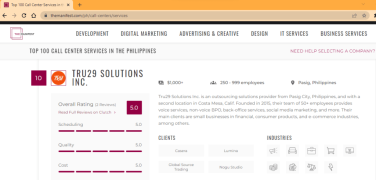
As the outsourcing landscape evolves, companies like Tru29 exemplify the importance of innovation and adaptation to sustain growth and relevance in the industry. In response to the rapid advancements in technology and the shifting expectations of clients, Tru29 has implemented a series of strategic initiatives designed to enhance service delivery and operational efficiency.
One of the core strategies Tru29 employs involves harnessing cutting-edge technologies such as artificial intelligence (AI) and machine learning. By integrating these technologies into their operational framework, Tru29 is able to automate routine processes, thereby minimizing errors and improving overall productivity. AI-driven analytics also provide valuable insights into client behaviors and preferences, empowering Tru29 to tailor services that meet the unique needs of each client more effectively.
Furthermore, Tru29 places a strong emphasis on continuous learning and development within its workforce. Recognizing that a skilled and knowledgeable team is pivotal to delivering high-quality services, Tru29 invests in training programs aimed at upskilling employees in emerging technologies and modern business practices. This commitment to workforce development not only enhances employee satisfaction but also ensures that the company remains competitive in an ever-changing industry.
In addition to technological advancements, Tru29 is keenly aware of the dynamic nature of client demands. To address these needs, the company proactively adopts a client-centric approach which involves soliciting feedback and adjusting service offerings accordingly. This adaptability enables Tru29 to remain agile and responsive, addressing market changes swiftly and effectively.
Ultimately, Tru29’s approach to innovation and adaptation serves as a testament to its commitment to excellence in outsourcing. By embracing technology and fostering a culture of continuous improvement, the company positions itself not only to survive but to thrive in the competitive outsourcing industry.
The Future of Outsourcing in the Philippines
As we look ahead, the future of outsourcing in the Philippines appears dynamic and full of potential. Driven by continuous advancements in technology and shifting market demands, the industry is projected to evolve significantly. Analysts suggest that the Philippines will continue to be a prime destination for business process outsourcing (BPO), as its skilled workforce and English-speaking population offer competitive advantages. By 2030, the industry may shift its focus towards more specialized services, including information technology outsourcing (ITO) and digital marketing, alongside traditional BPO.
With an increasing number of Western companies exploring outsourcing solutions, there is a growing trend towards automation and artificial intelligence integration in service delivery. This might redefine the roles and responsibilities within the outsourcing sector, leading to the emergence of tech-savvy professionals who can manage sophisticated tools and software applications. As workers become more adept at using advanced automation solutions, their contributions will enhance efficiency and service quality, ensuring the Philippines remains competitive globally.
Moreover, the COVID-19 pandemic has accelerated the transition towards remote working arrangements, prompting many outsourcing firms in the Philippines to adopt flexible work policies. This shift allows access to a broader talent pool across different geographic locations. As the remote work model becomes more entrenched, we might observe a shift in labor dynamics, resulting in a more diverse and resilient workforce that is responsive to changing market conditions.
In conclusion, outsourcing in the Philippines is not facing obsolescence; rather, it is poised for transformation. With proactive adaptation to technological advancements, an emphasis on specialized sectors, and innovative work arrangements, the outsourcing industry in the Philippines is projected to thrive in the coming years. Continued investment in skill development and infrastructure will further ensure its sustainability and relevance in the global market.
Case Studies: Success Stories in Philippine Outsourcing
Over the past two decades, the Philippines has emerged as a global leader in the outsourcing industry, with various companies demonstrating significant success through innovative business models and practices. One standout example is Teleperformance, which began its operations in the Philippines in 1996. With a steadfast commitment to delivering exceptional customer service, Teleperformance has expanded its workforce to more than 45,000 employees across multiple locations. Their focus on employee training and development, coupled with the use of advanced technology, has allowed them to maintain a competitive edge in the sector.
Another notable success story is Accenture Philippines. As part of the global consulting firm Accenture, this branch has been instrumental in driving digital transformation for its clients. By leveraging the skilled workforce in the country, Accenture not only provides IT services but also engages in business process outsourcing. Their emphasis on upskilling employees and integrating cutting-edge technologies has positioned them as a leader in both local and international markets, showcasing the potential for growth within the outsourcing industry.
Furthermore, 24/7 Customer, a prominent provider of customer engagement services, has demonstrated how adaptability can lead to success. Founded in 2000, the company has thrived by constantly evolving its business model to meet the changing needs of clients. By embracing innovative solutions such as AI and machine learning, 24/7 Customer has improved operational efficiencies while enhancing client satisfaction. Their case exemplifies the importance of flexibility in the outsourcing sector, illustrating that companies must continue to adapt to remain relevant.
These success stories underscore the resilience and potential of the Philippine outsourcing industry. By focusing on effective business practices and the continuous development of human resources, companies not only achieve profitability but also contribute significantly to the local economy. As outsourcing evolves, these case studies serve as benchmarks for other businesses seeking to succeed in this dynamic landscape.
Conclusion: What Lies Ahead for Outsourcing in the Philippines?
As we reflect on the vitality of the outsourcing industry in the Philippines, it becomes clear that this sector is not dying but rather evolving. The key points discussed throughout this examination reveal that while challenges such as automation and competition from other nations pose significant threats, they also stimulate innovation and adaptation within the industry. The Philippines has established itself as a strong contender in the global outsourcing landscape largely due to its skilled workforce, cultural affinity with Western markets, and English proficiency. However, to maintain and enhance this competitive edge, the outsourcing sector must embrace change.
Innovation is the cornerstone for the future of outsourcing in the Philippines. Companies must leverage technology to optimize processes and deliver enhanced services. This could involve integrating advanced analytics, artificial intelligence, and machine learning into workflows to increase efficiency and improve client satisfaction. Moreover, focusing on high-value services such as IT development, digital marketing, and customer experience management will be crucial in diversifying service offerings and attracting more clients.
The importance of stakeholder engagement cannot be understated. Businesses, government, and educational institutions must collaborate to ensure that the outsourcing workforce is adequately equipped with the necessary skills for emerging market demands. Programs aimed at training talent in digital competencies and soft skills will be vital in preparing the workforce for the shifts within the industry.
In conclusion, the future of the outsourcing industry in the Philippines and the world in general, will hinge on its ability to adapt to changing circumstances. By fostering innovation and collaboration among all stakeholders, the nation can secure its position as a leader in outsourced services. Stakeholders must act decisively and collaboratively to navigate the complexities of the global market, ensuring that the outsourcing sector remains resilient and competitive in the years to come.